
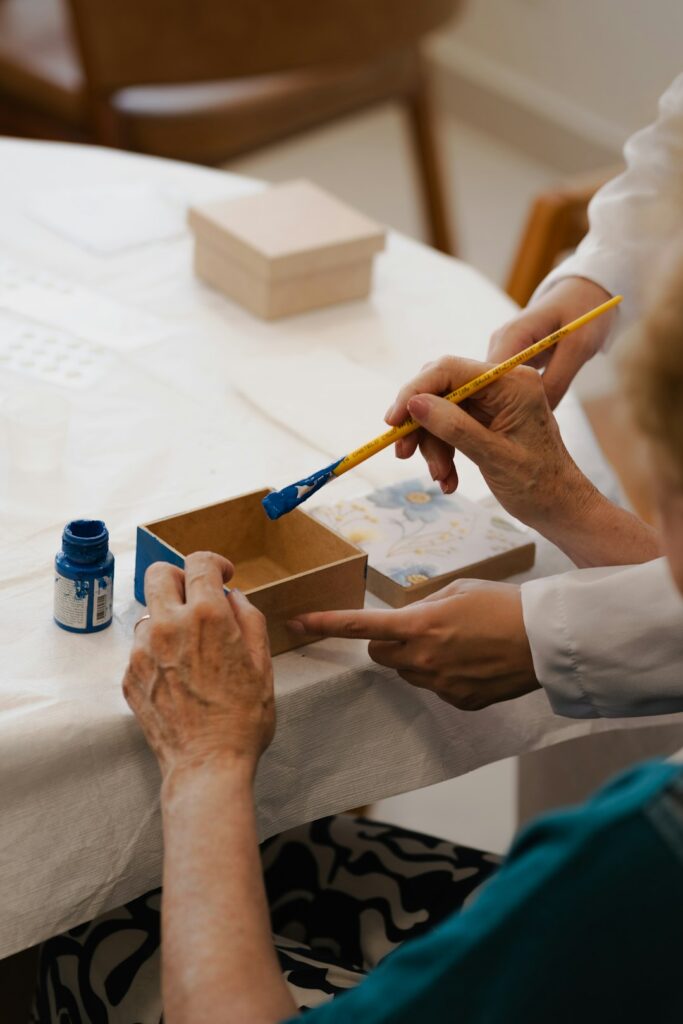
Creative activities can support emotional well-being, social connection, memory, and a sense of purpose for older adults in assisted living. Creativity does not require artistic training or strong physical ability. It can include writing a family story, arranging flowers, listening to music, decorating a room, solving a puzzle, or making something useful.
For residents and families in Churchill, PA, the most helpful approach is to match activities with personal interests, abilities, energy levels, and life experiences. The goal is not to produce perfect artwork. The goal is to encourage choice, participation, and enjoyment.
Why does creativity matter in assisted living?
Creative expression gives residents a way to communicate, make decisions, and remain connected to their identities. A person who has always enjoyed gardening, sewing, woodworking, cooking, music, photography, or storytelling may still value those interests even if physical or cognitive changes affect how they participate.
Creative activities may help support:
- A sense of purpose and accomplishment
- Conversation and social connection
- Hand coordination and gentle movement
- Memory recall and personal storytelling
- Emotional expression
- Relaxation and a more varied daily routine
- Familiar connections with family traditions and cultural experiences
Creativity should not be treated as a test of ability. A resident may enjoy choosing colors without painting, listening to a familiar song without singing, or discussing an old photograph without making a scrapbook.
What creative activities work well for older adults?
The best activities are flexible, familiar, and easy to adapt. They should allow residents to participate at different levels rather than requiring everyone to complete the same project.
Examples include:
- Watercolor painting, colored pencils, or large-format drawing
- Collage-making with magazines, fabric, greeting cards, or photographs
- Simple flower arranging or indoor plant care
- Decorating seasonal cards or small household items
- Singing, rhythm instruments, or guided music listening
- Poetry, journaling, or recording personal memories
- Baking or assembling simple recipes with supervision
- Knitting, crocheting, folding fabric, or sorting craft materials
- Puzzles, word games, and familiar trivia
- Creating a family-history notebook
- Looking through photographs and identifying people, places, or events
- Clay, textured materials, or other hands-on projects
Activities can also be practical. Folding napkins for a shared meal, organizing recipe cards, arranging a table centerpiece, or preparing decorations for a community gathering may feel more meaningful than a craft designed only to occupy time.
How can activities be adapted for different abilities?
Activities should be adjusted to the resident rather than expecting the resident to adjust to a fixed activity. Small changes can make participation safer and less frustrating.
For residents with limited hand strength or arthritis, consider:
- Larger handles on brushes, pencils, or utensils
- Lightweight materials
- Pre-cut paper and adhesive materials
- Shorter sessions with rest breaks
- Non-slip mats beneath project materials
For residents with vision changes, use strong color contrast, larger print, bright but comfortable lighting, and materials with noticeable textures. Keep supplies arranged in consistent locations so they are easier to identify.
For residents living with memory loss, familiar music, repeated routines, and step-by-step demonstrations may work better than lengthy verbal explanations. A project can be simplified into one action at a time, such as choosing a color, placing an item, or stirring ingredients.
Residents who tire easily may prefer brief activities spread throughout the day. Participation can include observing, choosing materials, giving directions, or talking about the project.
How can families encourage creativity during visits?
Family visits do not need to involve elaborate projects. A shared creative activity can provide a natural focus for conversation and reduce pressure to keep talking continuously.
Useful ideas include bringing copies of family photographs, asking a relative to describe a favorite recipe, listening to familiar music, or working together on a simple card or collage. Families can ask open-ended questions such as:
- “What colors did you use in your home?”
- “Which song reminds you of dancing?”
- “Who taught you to cook this dish?”
- “What did you enjoy making when you were younger?”
- “Would you rather choose the materials or watch the project?”

Avoid correcting every detail in a memory or taking over the activity. Personal stories may not be perfectly accurate, but they can still be meaningful. The resident should retain as much choice and control as possible.
Seasonal changes can offer natural inspiration. In the colder months, indoor projects involving music, family history, textiles, or nature photographs may be comfortable choices. During warmer weather, residents may enjoy observing outdoor plants, arranging flowers, or creating nature-themed artwork, provided the setting is safe and accessible.
What if a resident says, “I’m not creative”?
Many older adults associate creativity with formal art skills and may reject an activity because they do not consider themselves artistic. A different description can help. Instead of presenting something as an art project, describe it as decorating, remembering, arranging, listening, choosing, or making a gift.
A resident who does not want to paint may enjoy selecting colors for someone else. Someone who declines a writing activity may be willing to tell a story that another person records. A person who avoids group crafts may prefer a quiet one-to-one activity.
Interest often depends on timing. A resident may be tired, uncomfortable, anxious, or distracted during one session and interested later. Offering choices without pressure is more effective than insisting on participation.
How should assisted living communities make creativity more inclusive?
A creative program is more inclusive when it offers different levels of difficulty, various sensory experiences, and opportunities for both group and individual participation. Residents should not be excluded because of mobility limitations, communication changes, hearing loss, or cognitive impairment.
Helpful practices include:
- Providing seated and standing options
- Limiting clutter and keeping walkways clear
- Using materials that are easy to grip and identify
- Offering quiet spaces for residents who dislike busy rooms
- Reducing background noise during music or conversation
- Explaining activities in plain language
- Allowing residents to stop without embarrassment
- Displaying work only with the resident’s permission
- Recognizing participation rather than judging the finished product
Safety also matters. Small objects, sharp tools, hot surfaces, strong adhesives, and certain plants may not be appropriate for every resident. Activities involving food should account for allergies, swallowing concerns, dietary restrictions, and hand hygiene. If a project includes a possible hazard, supervision and individualized guidance may be necessary.
How can creativity support residents with memory loss?
Creative activities may remain accessible even when short-term memory, speech, or planning skills change. Music, rhythm, familiar textures, and repeated movements can sometimes be easier to engage with than conversation or complex instructions.
Projects should focus on the process rather than the final result. A resident may enjoy sorting buttons by color, pressing shapes into clay, matching pictures, or moving along to a familiar song. Avoid quizzing the person or turning the activity into a memory test.
The emotional response is often more significant than whether the resident remembers the activity afterward. Calm engagement, smiling, humming, or relaxed conversation can all indicate that the experience was worthwhile.
How can creativity become part of everyday life?
Creativity works best when it is not limited to a scheduled craft session. Everyday choices can provide creative opportunities: selecting clothing colors, arranging personal items, choosing music, helping plan a menu, or deciding how a room should look.
Residents can also contribute their knowledge. Someone who once repaired furniture may explain tools, while a former teacher may help choose words for a bulletin board. A person who enjoyed gardening may identify plants or advise others on arranging flowers.
These roles recognize residents as contributors, not merely participants. That distinction can strengthen dignity and belonging within the assisted living community.
